Note: This website displays most efficiently when viewed on a desktop or laptop computer. Click the Read Aloud button to hear this page spoken in English.
I, Edward E. Bruessard, the creator, author, and webmaster of this website, bring to you a bit of bad news. During the year 2025, I was diagnosed with having a case of stage 4 terminal prostate cancer. The bad news for me is that the prostate cancer has moved beyond my prostate gland. The prostate cancer has spread throughout my body. The prostate cancer has not spread to any of my organs.
From a negative perspective, based on my initial prostate cancer test results and after my initial consultation with my doctor, I was given a survivability range from the prostate cancer of anywhere between 3 to 5 years beginning with the year 2025. That is to say, my death could arrive from the prostate cancer anywhere between the years 2028 and 2030 assuming my death does not arrive before the year 2028.
In terms of my actual mortality or date of death, everything depends on the effectiveness of my cancer treatments and whether my body responds positively to the cancer treatments. My 3-to-5-year survivability range is only an estimate or a projection. It is entirely possible that I might die from prostate cancer before the 3 years arrive. I might die within the next 3 to 5 years. I might die at any point after 5 years. My precise expiration date from prostate cancer remains a big unknown, but my time remaining on Earth appears to be that of a shorter-than-normal life span.
To complicate my medical outlook further, during the year 2018, I was diagnosed with having a case of Type 2 diabetes. In effect, I have two serious medical ailments working against me. I must live with both prostate cancer and diabetes. My cause of death very well might turn out to be complications from diabetes rather than complications from prostate cancer. Time will tell.
I have been running the good race since December of 1979, which is when work commenced on the book titled The Age of Homo Sapiens Sapiens: Heaven or Hell. I was 23 years old at that point in time when work commenced on the book. Now, at the age of 70 years old as of year 2026, it seems as if my better days of healthy living might be fading away. It feels as if my health is on the decline. My life is becoming more of an afterthought. It is conceivable that I might not be among the living much longer. Through the Bruessard series of websites and through the book The Age of Homo Sapiens Sapiens: Heaven or Hell, I gave it my best effort. That is to say, over the intervening years from 1979 through 2026, I have persevered. I have remained true to the quest of trying to push the world in a more positive direction. Perhaps the time has arrived for me to pass the baton of positivity to the next generation for them to carry it forward into the future.
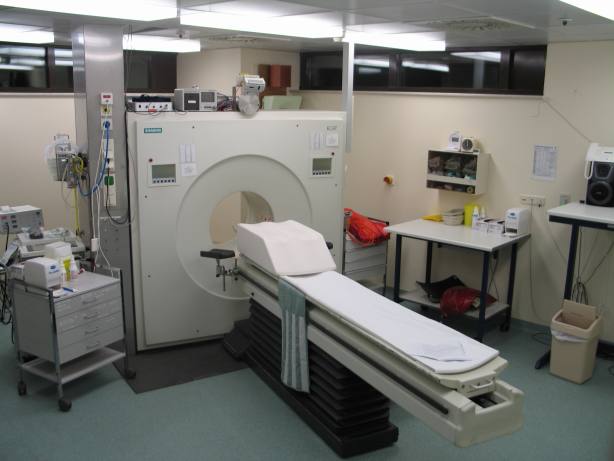
My June 2025 positive (Prostate-Specific Antigen or PSA) cancer blood test results, which were alarming and were explained to me before any type of prostate-cancer-treatment regimen was initiated by my doctor, is the reason why the year 2025 winner of the Annual Bruessard Award was announced in August 2025 instead of the planned December 2025 announcement date. After undergoing a series of more detailed prostate cancer testing, my case of metastatic prostate cancer was confirmed in September 2025 (after completing a Positron emission tomography or PET scan of my body). The metastatic confirmation occurred before my doctor initiated any type of prostate-cancer-treatment regimen. The September 2025 confirmation of a case of metastatic prostate cancer explains the reason why the planned announcement of the year 2026 Annual Bruessard Award winner was moved from December 2026 to January 2026. In short, the reason why I am changing the announcement date for the Annual Bruessard Award is because time, quite possibly, might not be on my side. Going forward, assuming I am healthy enough to continue creating the annual award page, the winner(s) will be announced on January 1 at the start of each year rather than on December 1 at the end of each year.
PET scanner
If this website, suddenly, should cease to exist, then the most likely explanation for its disappearance would be that I have passed away and am no longer among the living. The only thing I can say about this turn of events right now is that it has been a great run. Life has been good to me on this magnificent planet called Earth and living in these United States of America. Through the Bruessard series of websites and through the book The Age of Homo Sapiens Sapiens: Heaven or Hell, I hope that I have contributed positively towards making Earth a better planet for all humans to enjoy each day. The central focus of my writings has always been on the "here and now" rather than me focusing on any type of "afterlife" or life after death. (Note: See the hyperlinks at the bottom of the Home page to visit the related .biz, .info, .net, .mobi, and .com Bruessard websites.)
To conclude this announcement from a positive perspective, who knows? After my prostate-cancer-treatment regimen is completed, it is entirely possible that my doctor might declare that the treatment was a complete success. Possibly, after my prostate-cancer-treatment regimen is completed, the cancer inside me will have been slowed considerably or even altogether arrested. If such good news should come to pass, time will tell whether or not there is any type of a relapse or return of the prostate cancer. Terminal prostate cancer, once diagnosed, is an illness that requires lifetime attention and taking medications.
Very Important Cancer Note: For males starting at least at the age of 30 years old, if at all possible, you might wish to consider taking a once yearly test or screen for the presence of colon and prostate cancers (or based on the frequency and type of screening recommended by your doctor). For females starting at least at the age of 30 years old, if at all possible, you might wish to consider taking a once yearly mammogram screen for the presence of breast cancer (or based on the frequency and type of screening recommended by your doctor). Early detection and treatment of cancer greatly increase the chances of remission, survivability, and longevity. The good news is that some cancers are curable and can be successfully treated if detected in their early stages.
When it comes to detecting the presence of cancer, it is very important to be proactive. In a bit of good news on the horizon about proactively detecting cancer, in October 2024, it was announced that a new blood test is being developed. The blood test is capable of proactively detecting up to 12 different cancers. The blood test is called the miONCO-Dx blood test, and it is said to be 99% accurate. The miONCO-Dx blood test makes use of artificial intelligence (AI) to augment the cancer-detection process. The test was developed by the United Kingdom's biotechnology firm named Xgenera along with researchers from the University of Southampton. Xgenera's cancer-detection product is expected to be available for the [United Kingdom] general public to use in about 2 more years or after clinical trials are completed, and after the miONCO-Dx product is approved by the government as safe to use. Additional examples of cancer-detection clinical trials can be seen here: Multi-Cancer Early Detection (MCED).
Best wishes,
Edward E. Bruessard
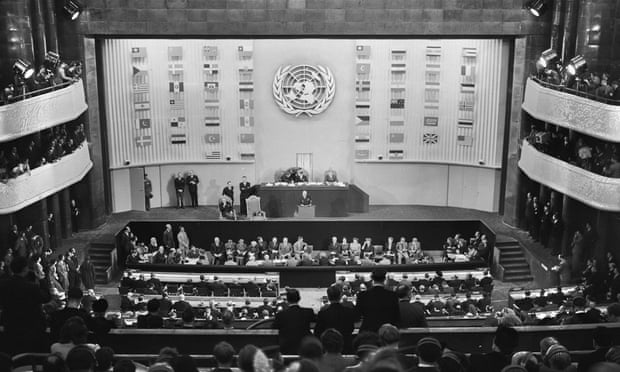
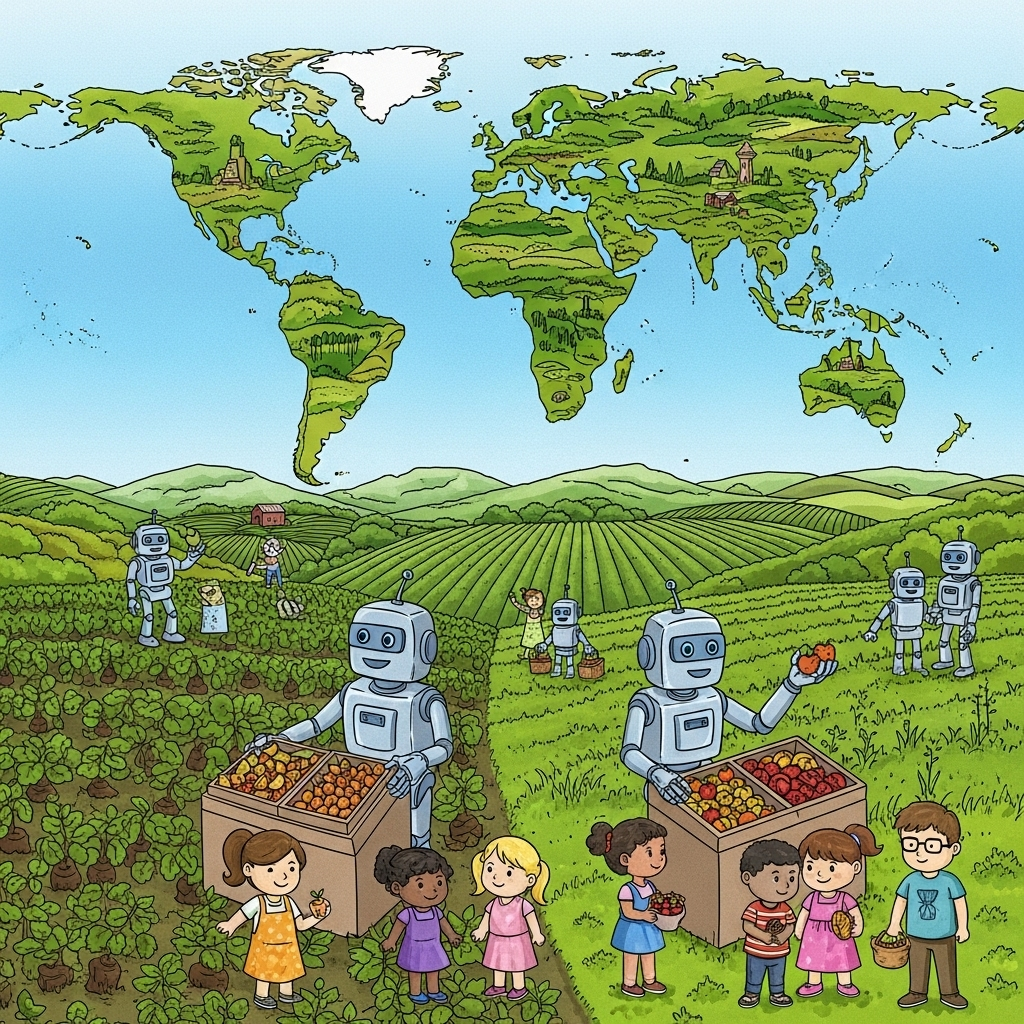
Please join me in recognizing standup4humanrights.org, a subsidiary of the United Nations' Office of the High Commissioner for Human Rights (OHCHR). Standup4humanrights.org is being recognized because it continues to work tirelessly in the present to make human rights for all peoples of the Earth a reality instead of an unattainable dream despite the Universal Declaration of Humans Rights as having been in effect since, 10-December-1948 (). As planet Earth moves in the direction of a new horizon or a new dimension of living known as the Age of Artificial Intelligence, the human legacy and the human impact on Earth should not be overlooked or forgotten. Central to the human legacy is the promulgation of certain inalienable or un-revocable human rights. One of the most important documents to explicitly set forth these un-revocable human rights is the 20th-century establishment of the Universal Declaration of Human Rights. In turn, the Universal Declaration of Human Rights was established as a direct result of World War II's destruction of property and its many, many awful, brutal, and gruesome fatalities.
The Universal Declaration of Human Rights was one of the first achievements of the newly established United Nations (UN). The UN Charter was signed on 26-June-1945 (), and the UN Charter took effect on 24-October-1945 (). Much like the Universal Declaration of Human Rights, the United Nations, too, was established as a direct result of World War II's destruction of property and its many, many awful, brutal, and gruesome fatalities.
There has been widespread global consensus about the need for—and the importance of—embracing a Universal Declaration of Human Rights. However, there has not been global unanimity on the provisions set forth in the Universal Declaration of Human Rights. That is to say, the Universal Declaration of Human Rights has not been fully embraced by all countries worldwide without some degree of controversy, disagreement, and refinement. For instance, on 05-August-1990 (), the member states of the Organization of the Islamic Conference (OIC) devised their own rendition of the Universal Declaration of Human Rights, which was known as the Cairo Declaration on Human Rights in Islam (CDHRI) and also was more simply referred to as the Cairo Declaration. The Cairo Declaration was meant to serve as an alternative to the Universal Declaration of Human Rights as applicable to Islamic teachings and traditions. Generally, the Cairo Declaration was meant to be embraced throughout the Islamic world. Particularly, the Cairo Declaration was meant to be embraced by its signatory countries. With Islamic Shari'ah being a mainstay and centerpiece of the Islamic religious faith, the Cairo Declaration was meant to accommodate, conform to, and preserve certain Islamic cultural and religious traditions of Shari'ah. Controversy surrounds the Cairo Declaration because some critics view the Cairo Declaration as a somewhat weaker version of the Universal Declaration of Human Rights. Critics of the Cairo Declaration particularly express concern or trepidation about the Cairo Declaration's shortcomings when it comes to matters such as freedom of religion, freedom of speech, political freedom, sexual freedom, and ensuring the full and equal participation of women in the political, civil, economic, social and cultural spheres of life within the Organisation of Islamic Cooperation's (OIC) member-state countries. Of course, even in many non-Islamic countries, sometimes there is a significant gap between their professions of support for—and embrace of—all humans rights as set forth in the Universal Declaration of Human Rights as compared to their actual implementation and practices of human rights in reality in their respective countries.
According to the United Nations' (UN) organizational chart, the Office of the High Commissioner for Human Right (OHCHR), which was established on 20-December-1993 (), falls under the direction of the UN's Secretariat. The United Nations' Human Rights Council (HRC) was founded on 15-March-2006 () to promote and protect human rights around the globe. The HRC was formerly called the Commission on Human Rights from 1947 to 2006, and it falls under the direction of the UN's General Assembly. The OHCHR is responsible for overseeing all of the United Nations' human right activities as they relate to the Universal Declaration of Human Rights including responsible for overseeing the activities of the HRC.
Bridging the Gap:
Striving to Achieve an International Living Standard and an International Standard of Human Dignity:
Towards a Universal Declaration of Human Rights:
The mission of the OHCHR and the HRC is to find new and innovative ways to "bridge the gap" between humans rights in theory (on paper) and human rights in practice (in reality on the ground). Their mission is to keep countries from backsliding on their human rights commitments. Standup4humanrights.org, in turn, is playing a vital role in promoting this ongoing endeavor of realizing human rights for all peoples of the Earth as set forth in the Universal Declaration of Human Rights.
In the aftermath of World War II (which began on 01-September-1939 and ended on 02-September-1945 or ended ), globally, there was widespread consensus that there has got to be a better way for humans to live on planet Earth. Instead of fighting and killing one another, the general consensus was that human life is precious. The general consensus was that, without exception, humans and nations should treat one another with dignity and respect regardless of "race, colour, sex, language, religion, political opinion, national or social origin, property, birth or other status." Thus, a reinvigorated notion emerged of universal rights for all humans, and this reinvigorated notion was a direct response to World War II's atrocities and killings coupled with the failings of the United Nations' predecessor organization known as the League of Nations (founded on 10-January-1920 or ). According to wikipedia.org, roughly 70 to 85 million human deaths were attributable to World War II, and 15 to 22 million human deaths were attributable to World War I not to mention all of the destruction of property.
The League of Nations (founded on 10-January-1920 or ) was established as a direct result of World War I's atrocities and fatalities. World War I began on 28-July-1914 and ended on 11-November-1918 (or ended ). The League of Nations was dissolved on 18-April-1946 after its functions were taken over by the newly formed United Nations. In turn, it is thought that the establishment of the League of Nations was inspired by its predecessors such as Immanuel Kant's book titled Perpetual Peace: A Philosophical Sketch (or ), the Congress of Vienna Final Act signed 09-June-1815 (or ), and the Inter-parliamentary Union (IPU) which was founded on 30-June-1889 (or ).
As stated above, in the aftermath of World War II and its many, many atrocious and gruesome casualties (that is, those who were killed and injured), there were global outcries of "never again." The World War II situation had become intolerable and unbearable. A by-product of those anti-war, anti-torture, and anti-killing outcries was the birth of the Universal Declaration of Human Rights to be applied to all of the peoples of the Earth. However, this notion of human rights did not emerge in a vacuum, and this notion of human rights cannot be fully attributable to World War II. This notion of human rights enjoys a long history and tradition going back centuries before World War II. From a purely Western perspective, the next video and timeline give insights into how the notion of human rights has evolved over time on Earth.
In a speech given on 19-December-1948, Eleanor Roosevelt, one of the drafters of the Universal Declaration of Human Rights, paid tribute to the influence that the Magna Carta (which was sealed on 15-June-1215 or ) had on the drafting of the Universal Declaration of Human Rights. In her speech, Eleanor Roosevelt referred to the Universal Declaration of Human Rights as becoming, "the international Magna Carta of all men everywhere." The Universal Declaration of Human Rights set forth an international norm or minimum standard of human dignity that humans should aspire to attain. In the same speech, Eleanor Roosevelt also paid tribute to the influence that other important historical documents had played on the drafting of the Universal Declaration of Human Rights.
The United Nations' Office of the High Commissioner for Human Rights (OHCHR) summed up the contemporary human rights picture on its website as quoted here: "This legal framework was born with the adoption of the Universal Declaration of Human Rights (UDHR), the first document in history to set out fundamental human rights…In December 1966 (), the UN General Assembly adopted two international treaties that would further shape international human rights: the International Covenant on Economic Social and Cultural Rights (ICESCR), and the International Covenant on Civil and Political Rights (ICCPR). These are often referred to as 'the International Covenants'…Since the UDHR was adopted in 1948 (), it has inspired a series of legally binding international human rights treaties, declarations and other instruments, all underpinning and guiding UN Human Rights activities today...The UDHR, together with the International Covenant on Civil and Political Rights (ICCPR) and its two Optional Protocols, and the International Covenant on Economic, Social and Cultural Rights (ICESCR), form the so-called International Bill of Human Rights…The ICESCR and the ICCPR set out the civil, political, economic, social and cultural rights that everyone is entitled to." Click the following link to see if your country's national government has ratified the Conventions: Status of Ratification.
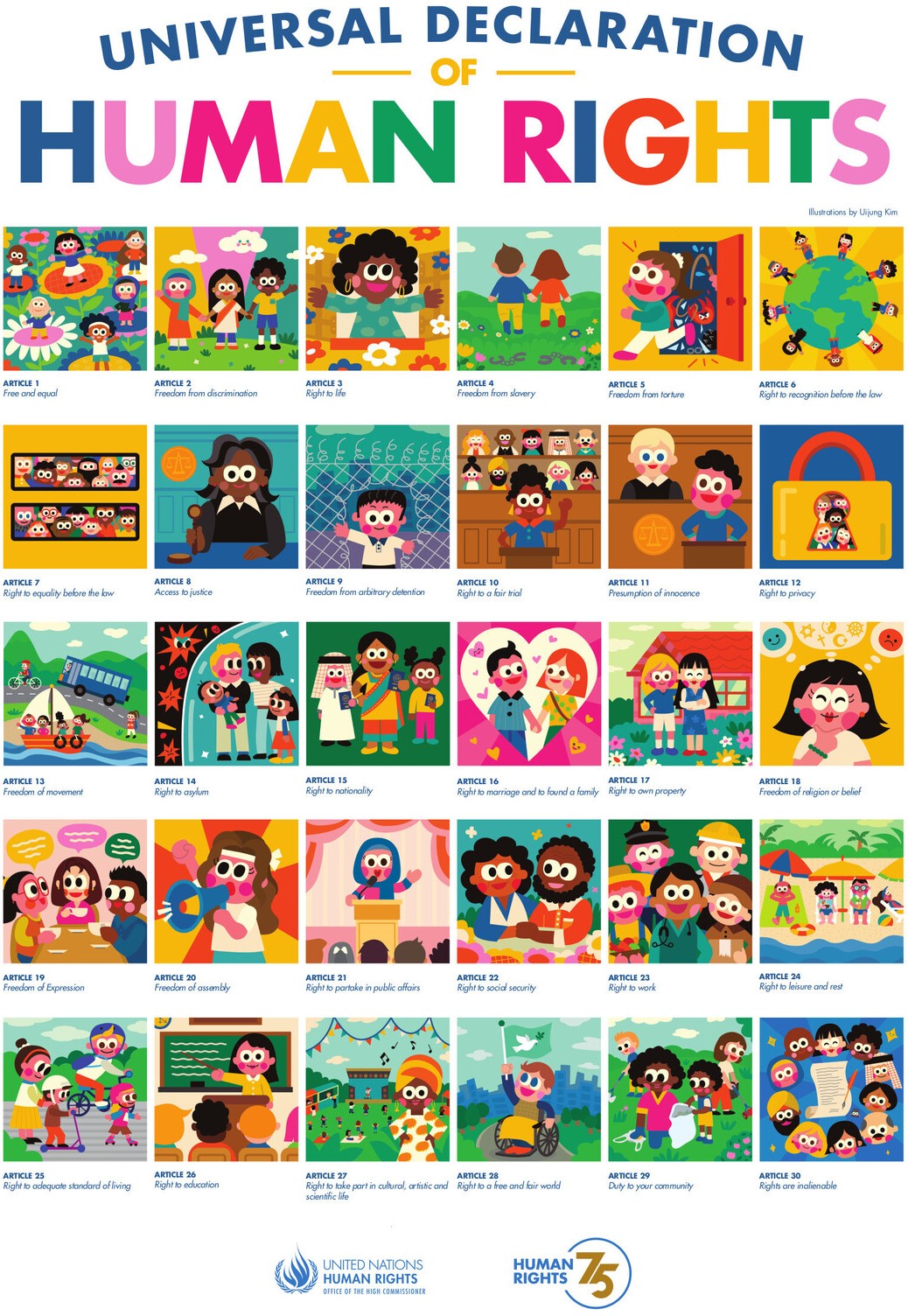
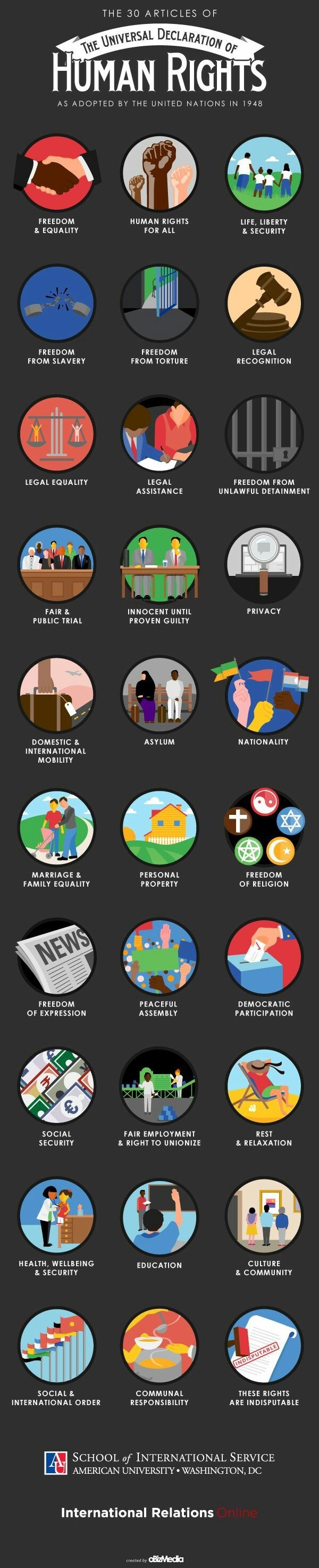
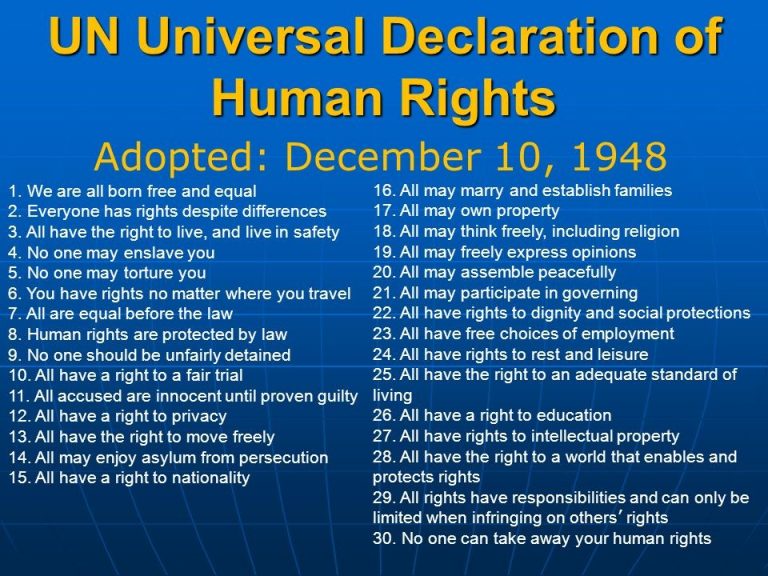
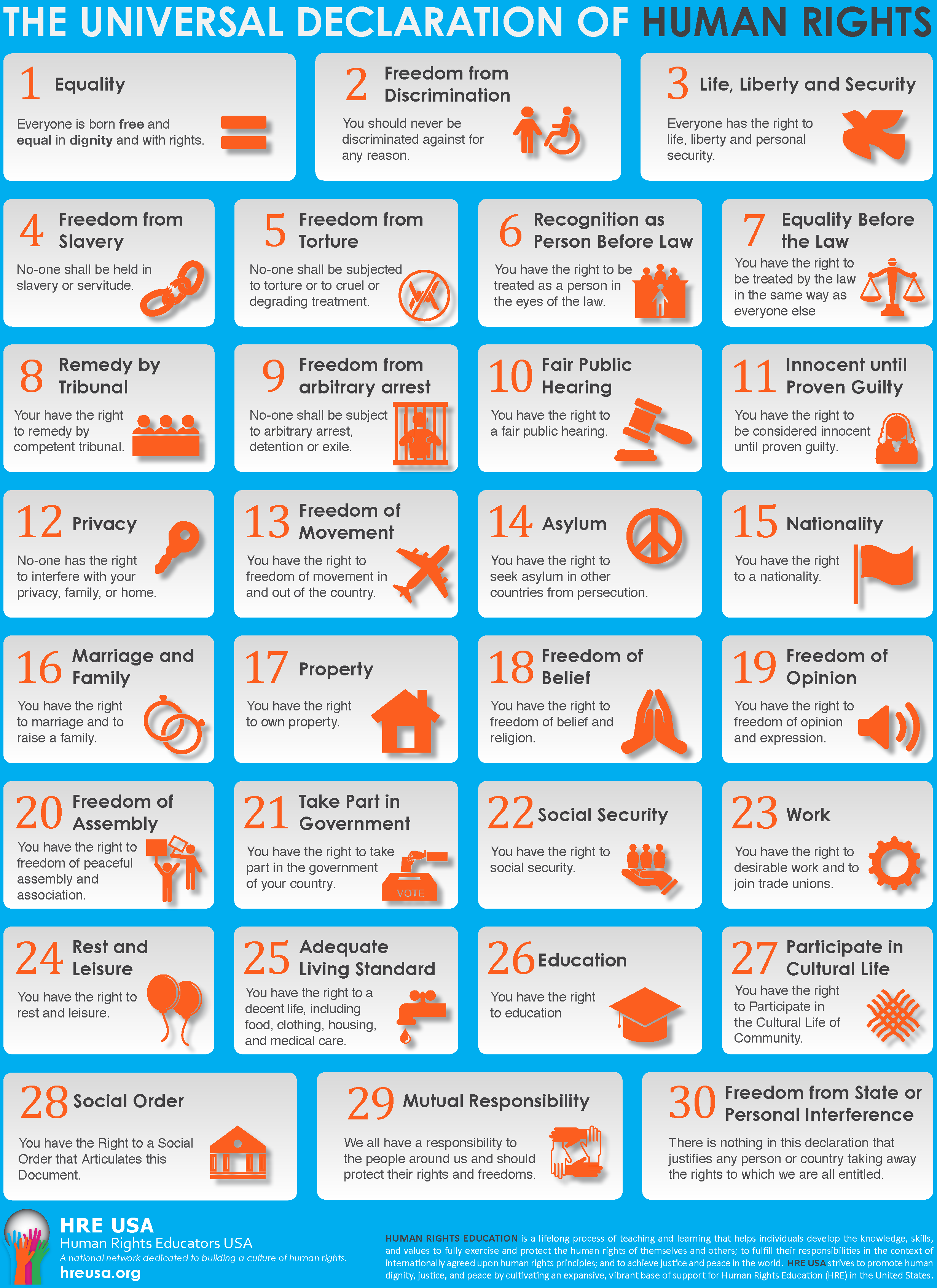
Below is the full text of the 10-December-1948 () Universal Declaration of Human Rights in all of its glory along with some summary graphics.
Universal Declaration of Human Rights
"The Universal Declaration of Human Rights (UDHR) is a milestone document in the history of human rights. Drafted by representatives with different legal and cultural backgrounds from all regions of the world, the Declaration was proclaimed by the United Nations General Assembly in Paris on 10 December 1948 () (General Assembly resolution 217 A) as a common standard of achievements for all peoples and all nations. It sets out, for the first time, fundamental human rights to be universally protected and it has been translated into over 500 languages The UDHR is widely recognized as having inspired, and paved the way for, the adoption of more than seventy human rights treaties, applied today on a permanent basis at global and regional levels (all containing references to it in their preambles)." Source: un.org
Universal Declaration of Human Rights
Preamble
Whereas recognition of the inherent dignity and of the equal and inalienable rights of all members of the human family is the foundation of freedom, justice and peace in the world,
Whereas disregard and contempt for human rights have resulted in barbarous acts which have outraged the conscience of mankind, and the advent of a world in which human beings shall enjoy freedom of speech and belief and freedom from fear and want has been proclaimed as the highest aspiration of the common people,
Whereas it is essential, if man is not to be compelled to have recourse, as a last resort, to rebellion against tyranny and oppression, that human rights should be protected by the rule of law,
Whereas it is essential to promote the development of friendly relations between nations,
Whereas the peoples of the United Nations have in the Charter reaffirmed their faith in fundamental human rights, in the dignity and worth of the human person and in the equal rights of men and women and have determined to promote social progress and better standards of life in larger freedom,
Whereas Member States have pledged themselves to achieve, in co-operation with the United Nations, the promotion of universal respect for and observance of human rights and fundamental freedoms,
Whereas a common understanding of these rights and freedoms is of the greatest importance for the full realization of this pledge,
Now, therefore,
The General Assembly,
Proclaims this Universal Declaration of Human Rights as a common standard of achievement for all peoples and all nations, to the end that every individual and every organ of society, keeping this Declaration constantly in mind, shall strive by teaching and education to promote respect for these rights and freedoms and by progressive measures, national and international, to secure their universal and effective recognition and observance, both among the peoples of Member States themselves and among the peoples of territories under their jurisdiction. Table of Content
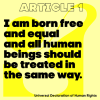
Article 1
All human beings are born free and equal in dignity and rights. They are endowed with reason and conscience and should act towards one another in a spirit of brotherhood. Table of Content
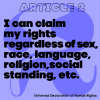
Article 2
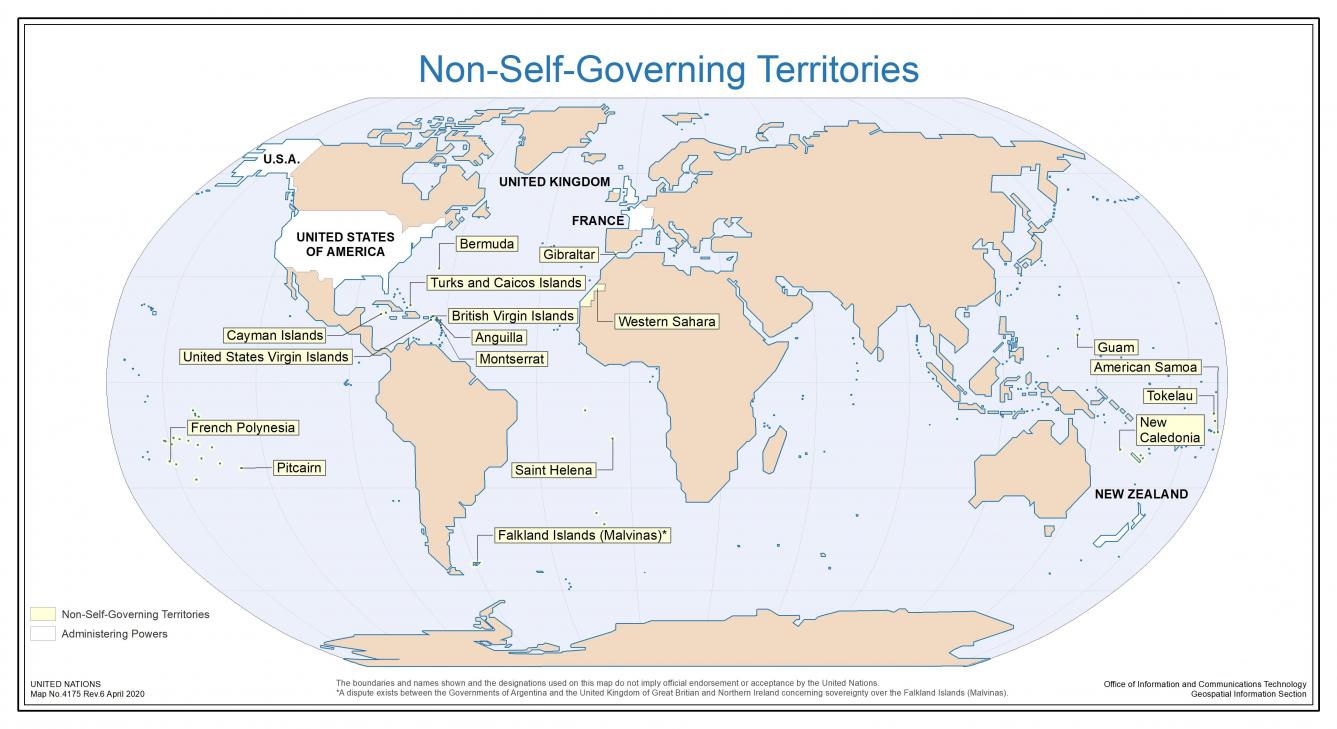
Everyone is entitled to all the rights and freedoms set forth in this Declaration, without distinction of any kind, such as race, colour, sex, language, religion, political or other opinion, national or social origin, property, birth or other status. Furthermore, no distinction shall be made on the basis of the political, jurisdictional or international status of the country or territory to which a person belongs, whether it be independent, trust, non-self-governing or under any other limitation of sovereignty. Table of Content
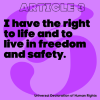
Article 3
Everyone has the right to life, liberty and security of person. Table of Content
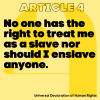
Article 4
No one shall be held in slavery or servitude; slavery and the slave trade shall be prohibited in all their forms. Table of Content
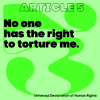
Article 5
No one shall be subjected to torture or to cruel, inhuman or degrading treatment or punishment. Table of Content
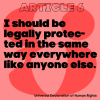
Article 6
Everyone has the right to recognition everywhere as a person before the law. Table of Content
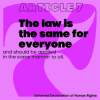
Article 7
All are equal before the law and are entitled without any discrimination to equal protection of the law. All are entitled to equal protection against any discrimination in violation of this Declaration and against any incitement to such discrimination. Table of Content
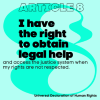
Article 8
Everyone has the right to an effective remedy by the competent national tribunals for acts violating the fundamental rights granted him by the constitution or by law. Table of Content
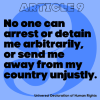
Article 9
No one shall be subjected to arbitrary arrest, detention or exile. Table of Content
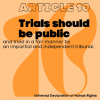
Article 10
Everyone is entitled in full equality to a fair and public hearing by an independent and impartial tribunal, in the determination of his rights and obligations and of any criminal charge against him. Table of Content
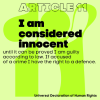
Article 11
Everyone charged with a penal offence has the right to be presumed innocent until proved guilty according to law in a public trial at which he has had all the guarantees necessary for his defence.
No one shall be held guilty of any penal offence on account of any act or omission which did not constitute a penal offence, under national or international law, at the time when it was committed. Nor shall a heavier penalty be imposed than the one that was applicable at the time the penal offence was committed. Table of Content
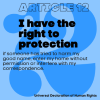
Article 12
No one shall be subjected to arbitrary interference with his privacy, family, home or correspondence, nor to attacks upon his honour and reputation. Everyone has the right to the protection of the law against such interference or attacks. Table of Content
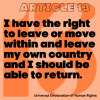
Article 13
Everyone has the right to freedom of movement and residence within the borders of each state.
Everyone has the right to leave any country, including his own, and to return to his country. Table of Content
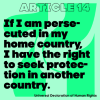
Article 14
Everyone has the right to seek and to enjoy in other countries asylum from persecution.
This right may not be invoked in the case of prosecutions genuinely arising from non-political crimes or from acts contrary to the purposes and principles of the United Nations. Table of Content
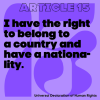
Article 15
Everyone has the right to a nationality.
No one shall be arbitrarily deprived of his nationality nor denied the right to change his nationality. Table of Content
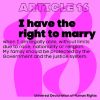
Article 16
Men and women of full age, without any limitation due to race, nationality or religion, have the right to marry and to found a family. They are entitled to equal rights as to marriage, during marriage and at its dissolution.
Marriage shall be entered into only with the free and full consent of the intending spouses.
The family is the natural and fundamental group unit of society and is entitled to protection by society and the State. Table of Content
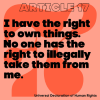
Article 17
Everyone has the right to own property alone as well as in association with others.
No one shall be arbitrarily deprived of his property. Table of Content
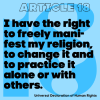
Article 18
Everyone has the right to freedom of thought, conscience and religion; this right includes freedom to change his religion or belief, and freedom, either alone or in community with others and in public or private, to manifest his religion or belief in teaching, practice, worship and observance. Table of Content
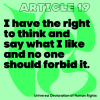
Article 19
Everyone has the right to freedom of opinion and expression; this right includes freedom to hold opinions without interference and to seek, receive and impart information and ideas through any media and regardless of frontiers. Table of Content
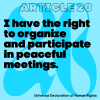
Article 20
Everyone has the right to freedom of peaceful assembly and association.
No one may be compelled to belong to an association. Table of Content
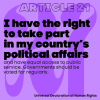
Article 21
Everyone has the right to take part in the government of his country, directly or through freely chosen representatives.
Everyone has the right of equal access to public service in his country.
The will of the people shall be the basis of the authority of government; this will shall be expressed in periodic and genuine elections which shall be by universal and equal suffrage and shall be held by secret vote or by equivalent free voting procedures. Table of Content
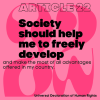
Article 22
Everyone, as a member of society, has the right to social security and is entitled to realization, through national effort and international co-operation and in accordance with the organization and resources of each State, of the economic, social and cultural rights indispensable for his dignity and the free development of his personality. Table of Content
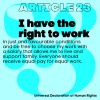
Article 23
Everyone has the right to work, to free choice of employment, to just and favourable conditions of work and to protection against unemployment.
Everyone, without any discrimination, has the right to equal pay for equal work.
Everyone who works has the right to just and favourable remuneration ensuring for himself and his family an existence worthy of human dignity, and supplemented, if necessary, by other means of social protection.
Everyone has the right to form and to join trade unions for the protection of his interests. Table of Content
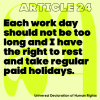
Article 24
Everyone has the right to rest and leisure, including reasonable limitation of working hours and periodic holidays with pay. Table of Content
Article 25
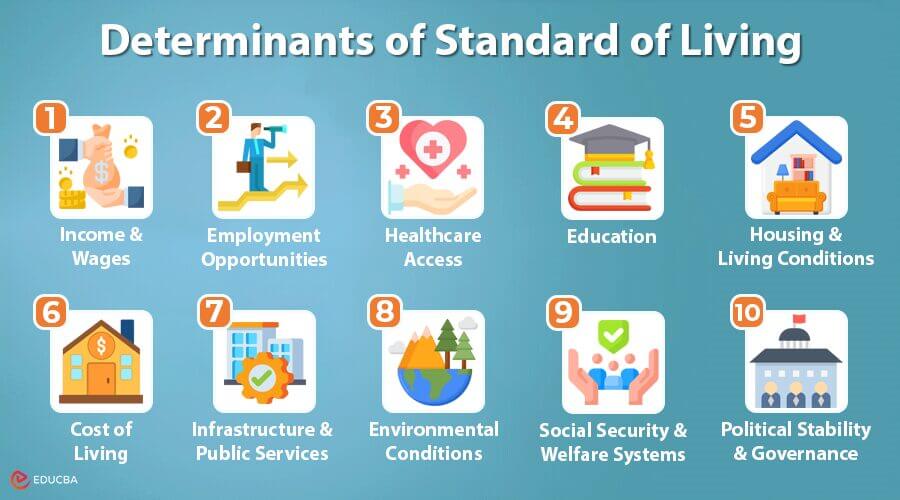
Everyone has the right to a standard of living adequate for the health and well-being of himself and of his family, including food, clothing, housing and medical care and necessary social services, and the right to security in the event of unemployment, sickness, disability, widowhood, old age or other lack of livelihood in circumstances beyond his control.
Motherhood and childhood are entitled to special care and assistance. All children, whether born in or out of wedlock, shall enjoy the same social protection. Table of Content
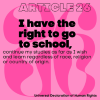
Article 26
Everyone has the right to education. Education shall be free, at least in the elementary and fundamental stages. Elementary education shall be compulsory. Technical and professional education shall be made generally available and higher education shall be equally accessible to all on the basis of merit.
Education shall be directed to the full development of the human personality and to the strengthening of respect for human rights and fundamental freedoms. It shall promote understanding, tolerance and friendship among all nations, racial or religious groups, and shall further the activities of the United Nations for the maintenance of peace.
Parents have a prior right to choose the kind of education that shall be given to their children. Table of Content
Article 27
Everyone has the right freely to participate in the cultural life of the community, to enjoy the arts and to share in scientific advancement and its benefits.
Everyone has the right to the protection of the moral and material interests resulting from any scientific, literary or artistic production of which he is the author. Table of Content
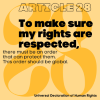
Article 28
Everyone is entitled to a social and international order in which the rights and freedoms set forth in this Declaration can be fully realized. Table of Content
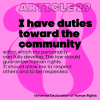
Article 29
Everyone has duties to the community in which alone the free and full development of his personality is possible.
In the exercise of his rights and freedoms, everyone shall be subject only to such limitations as are determined by law solely for the purpose of securing due recognition and respect for the rights and freedoms of others and of meeting the just requirements of morality, public order and the general welfare in a democratic society.
These rights and freedoms may in no case be exercised contrary to the purposes and principles of the United Nations. Table of Content
Article 30
Nothing in this Declaration may be interpreted as implying for any State, group or person any right to engage in any activity or to perform any act aimed at the destruction of any of the rights and freedoms set forth herein. Table of Content
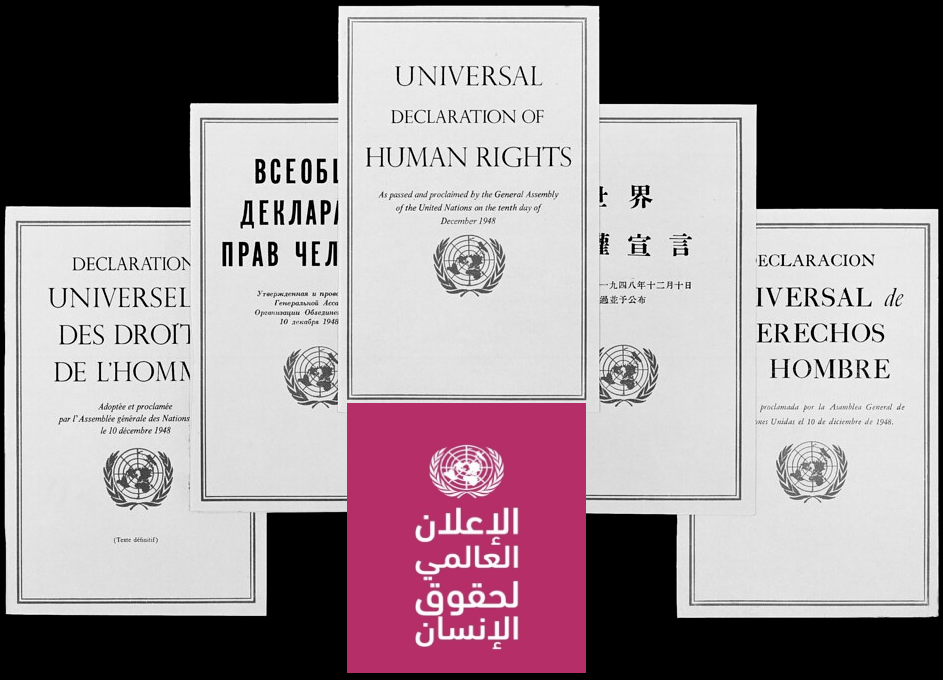
As of 2026, the table below lists the 570 different translations of the Universal Declaration of Human Rights. It has been noted that the Holy Bible from the Christianity religious faith is the world's most translated book. The Universal Declaration of Human Rights is the world's most translated document.
The Universal Declaration of Human Rights (UDHR) in 570 Different Languages:
The map and the "see-also" links below the map provide country-by-country summaries of the progress that has been made in fulfilling the tenets of the Universal Declaration of Human Rights.
Map of the Universal Declaration of Human Rights' Country Progress Reports
Since the 1948 adoption of the Universal of Human Rights, its scope has continually expanded to tackle the multifarious challenges that humans face. The notion of human rights nowadays as of 2026 encompasses special attention paid not only to the general population of a given country but also a broad range of neglected, overlooked, and oftentimes forgotten human communities often within a given country. These human communities run the gamut to include black people, indigenous peoples, refugees and stateless people, women, children, the disabled, the elderly, gay or LGBTQIA+ people, a renewed emphasis on the right to live, and also a newly evolving focus on environmental-justice as related to improved standards of living. Click each link below to read more about each of these human communities. As listed below and with the passage of time, various treaty obligations and metrics have been established to gauge overall progress towards fully extending human rights to all peoples of the Earth:
Convention relating to the Status of Refugees [Adopted 28-July-1951 () by United Nations Conference of Plenipotentiaries on the Status of Refugees and Stateless Persons convened under General Assembly resolution 429 (V) of 14 December 1950]
Convention on the Reduction of Statelessness [Adopted 30-August-1961 () by Conference of Plenipotentiaries which met in 1959 and reconvened in 1961 in pursuance of General Assembly resolution 896 (IX)]
Understanding Human Rights and Climate Change [Submitted 27-November-2015 () by OHCHR to the 21st Conference of Parties to the United Nations Framework Convention on Climate Change (UNFCCC)]
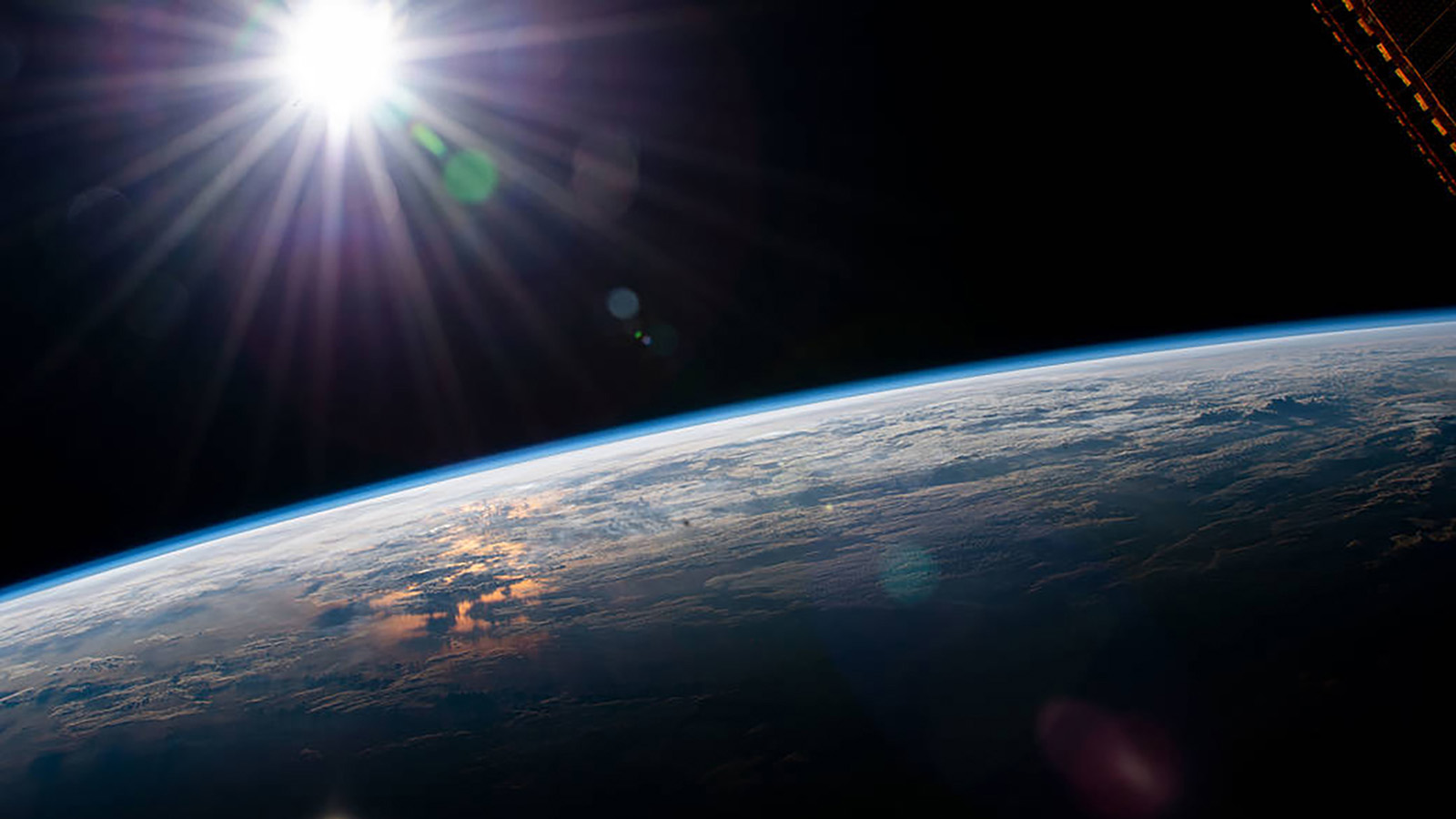
Humans ought never forget about the big picture, and the big picture is this: There simply is no other place in the Universe like marvelous planet Earth. Earth is a gem of a place to behold with its halo atmosphere, blue skies, white clouds, sandy beaches, mountain peaks, grassy plains, leafy trees, rainbow flowers, crystal waters, sparkling glaciers, thunder claps, lightening streaks, and its menagerie of life forms. All of this wonder is for humans to marvel as the Earth rotates on its axis in the whispering wind under the watchful eye of the ever-present Sun all of the while floating through space as it rides the Orion-Cygnus arm of the Milky Way galaxy.
As of 2026, Earth also is the only known heavenly body in the Universe to harbor life. Earth, most definitely, is the only known heavenly body in the Solar System to harbor life. Earth teems with all different kinds of life forms. Earth is the only known habitable heavenly body where human beings, en masse, can live and thrive. Through the Sun's transmission of heat and light to Earth, the Sun becomes the issuer of life to Earth.
Planet Earth
The key to human survival—or the key to human avoidance of extinction—would seem to be for (a) humans to live united as a species, (b) for humans to live in peace with one another, and (c) for humans to live in harmony with Mother Nature by taking good care of planet Earth. After all, what good is there for an abundance of air to exist on Earth if the air is not clean enough for humans to breathe it? What good is there for an abundance of water to exist on Earth if the water is not clean enough for humans to drink it? What good is there for an abundance of soil to exist on Earth if the soil is not suitable enough for humans to use it for growing food? The situation with humans maintaining a certain degree of air, water, and arable land purity is akin to having a fire hydrant sitting next to a building or housing structure. What good is the fire hydrant if it does not work should the structure catch fire? An essential ingredient of the human right to live is for humans to maintain an acceptable state of ecological purity whereby clean air, water, and arable land exist for all life forms to enjoy. As an aside, it has been noted that, generally speaking, the Rule of 3 applies when it comes to the human survival needs. That is to say, as a general rule of thumb, humans cannot stay alive if they go about 3 minutes without air, about 3 days without water (liquids), or about 3 weeks without food. If someone should perish or die due to a lack of air, water, or food, then click this link to see what happens next to the dead body notwithstanding religious teachings to the contrary. Life on Earth is resilient but it also is tenuous.
Fire Hydrant Next to Residential Building:
A bright and prosperous future for the human species seems to be contingent upon humans exercising good judgment and applying wisdom to their decision-making processes notwithstanding the future prospects for an Age of Artificial Intelligence (AI) to takeover Earth. In the worst possible annihilation outcome for the human species, it truly would be a crying shame if humans turn out to be the culprits who were responsible for foolishly destroying life on Earth thereby leading to their own demise or extinction. Life is precious. Life is miraculous. Humans should always hold life in the highest esteem. After all, the most important human right of all is the right to live. Humans ought to be making the most of their brief life span on Earth instead of going around killing one another with firearms, bombs, and biological pathogens. Humans ought to adopt a new mindset in which humanity's higher principles and ideals are embraced by all peoples such as, for instance, the Universal Declaration of Human Rights.
With few exceptions [such as the exception whereby most plant species can manufacture their own food or insects collecting food from nectar] and whether referring to the Protozoa, Chromista, Plantae, Fungi, or Animalia Kingdoms in the web of life, it is both a sad and an unfortunate fact that many of the Earth's life forms must consume one another for food or nutrients simply to stay alive. In the case of humans, they mainly devour plant and animal life forms for sustenance. Can humans restrict their killing only to acquire the amount the food required for sustenance? Must humans engage in non-food-related acts of killing? Humans do not need to eat one another for sustenance; therefore, there is no excuse or no need for humans to be going around and killing one another. The fact that it makes no sense for humans to keep killing one another was a primary motive for humans to promulgate the Universal Declaration of Human Rights.
In tandem with the light and heat emanating from the Sun, much like humans and Earth's other life forms also must consume air and water to stay alive, these simple facts of life on Earth (that is, the need for the presence of an adequate supply of air, water, food, shelter, heat, and light) pose a problem and a challenge for those humans who contemplate leaving planet Earth to colonize other heavenly bodies within the Solar System—and beyond the Solar System. When contemplating leaving planet Earth to colonize other heavenly bodies, other factors to consider would be human adaptability to the the temperature challenges and the gravity challenges posed by humans living on other heavenly bodies beyond Earth. With the human species serving as the Earth's primary caretaker, given the human species' outsized footprint on Earth, these simple facts of life on Earth also make it all too clear that it is very important for humans to cherish and take good care of the gem they already possess, which is planet Earth. For, as the saying goes, "a bird in the hand is worth two in the bush." That is to say, it is better for humans simply to take good care of well-known and completely habitable and adaptable planet Earth (hence, the bird already in hand) rather than for humans to take flight to live on unknown exoplanets or other unknown heavenly bodies beyond Earth where human survivability is uncertain (hence, the two birds in the bush). In other words, having two birds sounds enticing (that is, for humans to be able to live on Earth and also to live on another heavenly body), but is the human callosity towards a perfectly working, well-known, fully-adaptable and fully-habitable Earth (with the right temperature and the right gravity) really worth it to cause humans to have to relocate to another heavenly body? Granted, much like every human will die one day, even planet Earth will die one day if for no other reason than the death of the Sun. It is the eventual death [explosion] of the Sun—and the possible incineration of Earth is the process—which makes human space colonization beyond the Solar System a worthwhile endeavor.
 Read Aloud